The problem
My wife's grandparents read all their lives and can't any more. Everything built to help assumes a smartphone.
They are in their nineties. The print is simply too small now, and no reading glasses fix that. The books they wanted were not the ones the audiobook industry sells — some had never been recorded by anyone, some were in a language the big services barely stock.
Every product I looked at assumed the same three things: a smartphone, an account, and a subscription that keeps working exactly as long as somebody keeps paying it. That is a lot to ask of a 90-year-old, and it is a fragile sort of gift. What they do have, and use every day, is a television and a remote control.
What I assumed — and what the work taught me
I was wrong about the voice, wrong about the budget, and wrong about what the television would let me do.
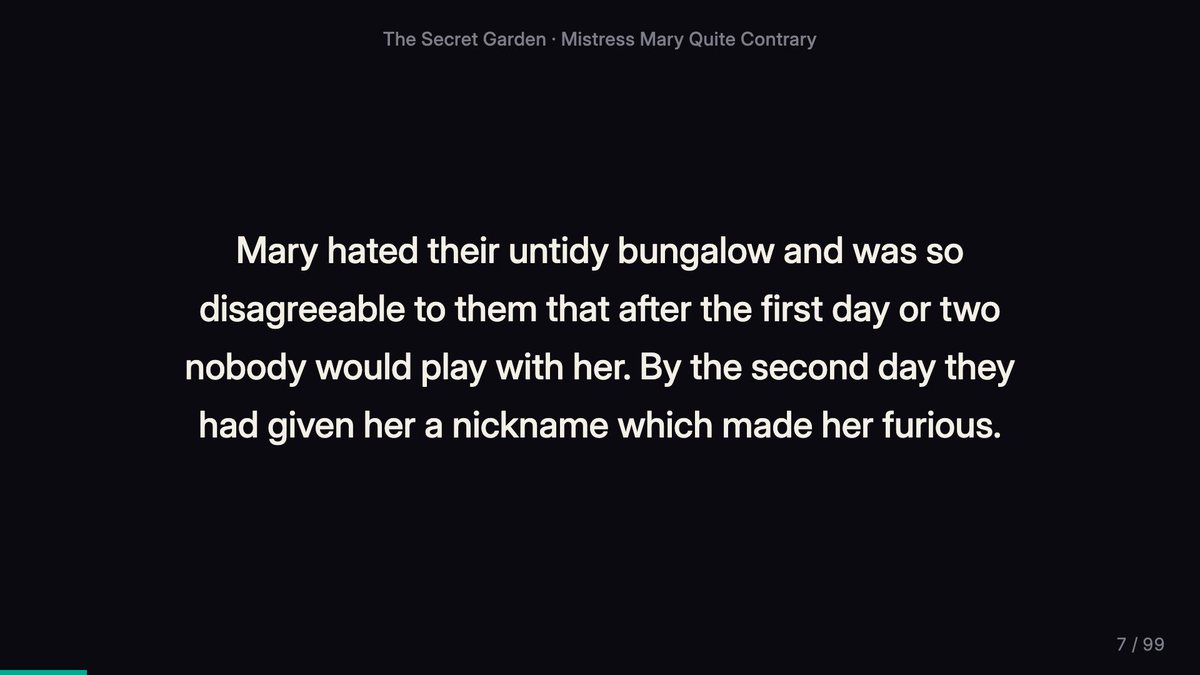
I assumed computer narration would sound robotic, and that this was simply the price of doing it at all. It turns out robotic is a symptom of how you feed the machine, not of the machine. Cutting a chapter into small screen-sized pieces and reading each one separately resets the voice’s intonation dozens of times a chapter — it never builds a sentence, never performs an exchange. Give it whole paragraphs instead, and merge a run of back-and-forth dialogue into a single take, and it acts. That one change is the project. Everything else is plumbing around it.
I assumed a library this size needed a budget. The finished library is about 5.5 million characters of narration. On commercial voice services that is roughly USD 700–1,200 for one pass — and I re-narrated the entire library several times as the pacing improved, which at those rates would have been a small car. A free toolchain was never a cost saving. It was the only reason I could afford to keep being wrong, which is the same thing as getting it right.
I assumed the television could be talked into doing the work. It cannot. A Samsung TV will not auto-open anything from a USB stick — that is fixed in the firmware, and I spent a genuinely embarrassing amount of time confirming it from several directions before accepting the answer. So the design gave way instead: the stick stays plugged in, the TV returns to it when it wakes, every folder is named so the person browsing sees the book and its author, and the episodes are numbered so the television’s own “play next” carries them from chapter to chapter with nobody pressing anything.
Free wasn't thrift. It was the budget for being wrong.
How I solved it
A book file goes in. Ordinary video files come out — the kind any television will play from a USB stick.
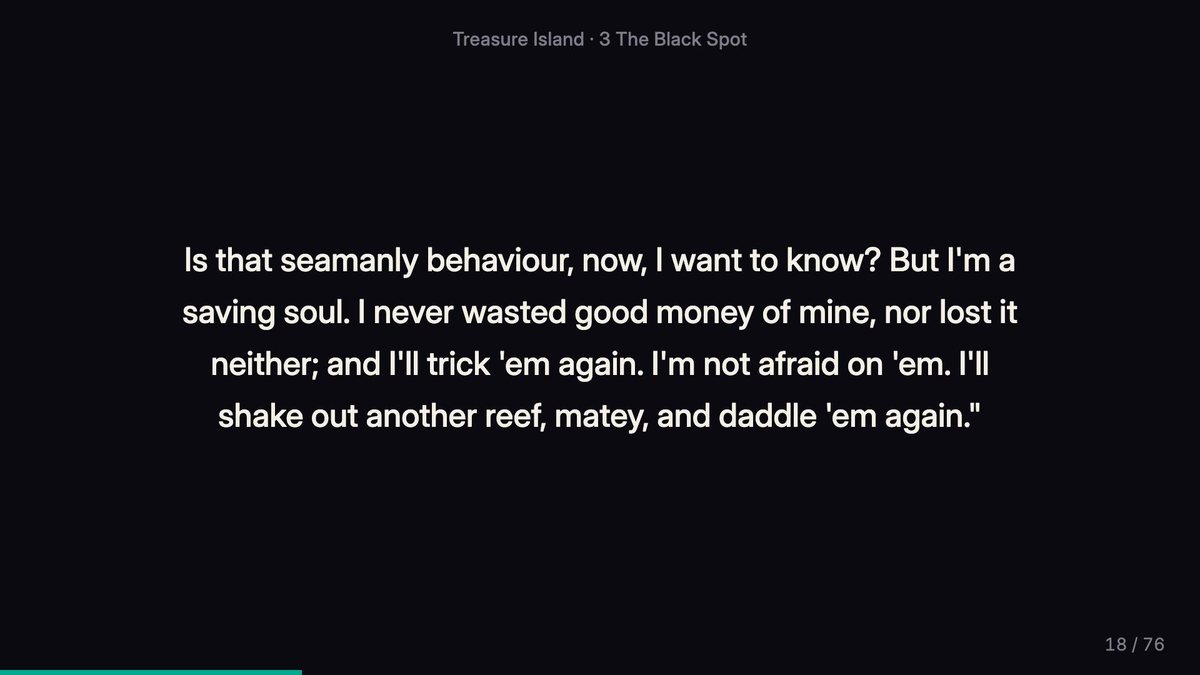
The software splits a book into chapters, cleans up the artefacts publishers leave behind, reads each chapter aloud, and renders one video per chapter. No app, no account, no internet.
Everything is set for someone sitting across a room, not holding a phone. Type is capped so it never falls below a readable size, stepping down through a few fixed sizes rather than shrinking to fit. The voice is slowed by a fifth — chosen by ear against the alternatives, not picked off a spec sheet. Every screen stays up long enough to actually be read, and the text is anchored to the narration so the two can’t drift apart.
A library this size can hide a fault easily, so the pipeline audits itself before anything ships: every episode checked for text that was spoken but never displayed, screens that flash past too quickly, missing or mismatched audio, and chapters that were quietly never built at all. That last check earned its keep — it caught a book sitting at 4 chapters of 41 while looking perfectly healthy by every other measure.
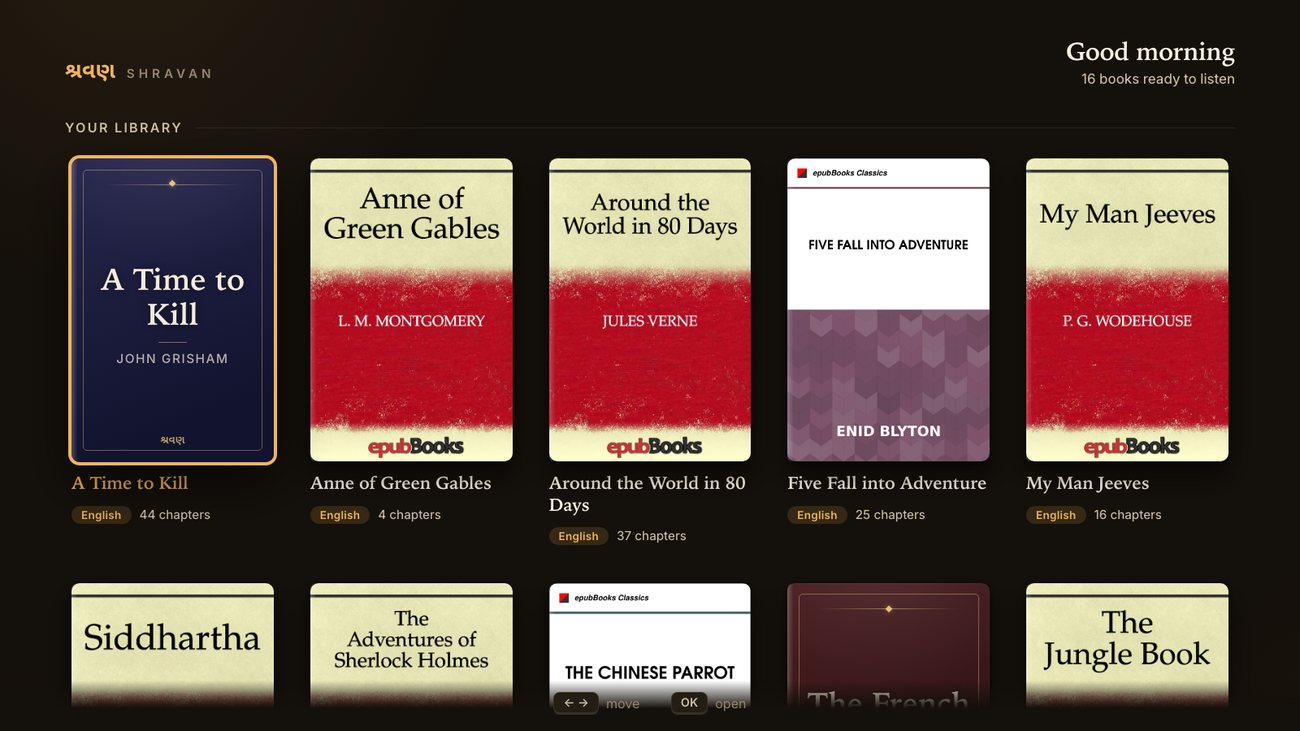
There is a proper library app too — one self-contained page, warm and lamplit, covers leading, a “continue listening” shelf, and a player you can drive entirely with a remote’s arrow keys. It runs over the home network or straight off the USB stick with no server at all.
What they got
A stick that has been plugged into their television since July, and nothing about it can expire.
Every file was checked before it left the house — each episode compared against its source, and every video on the stick opened and confirmed playable. “It looked fine in the folder” is not a standard you apply to a gift for someone in their nineties.
There is no account to lose, no subscription to lapse, no company that can switch it off, and no phone involved at any point. Another book takes an evening to add. And when a better voice comes along, it can be swapped in without rebuilding anything — including into their own language, when that work resumes.